UDM · PR
Yongama Ludwe Zigebe
Present at 36 of 37 council meetings (97%) while on council, according to the City's signed minutes.
Party from: City councillor list, Sep 2026
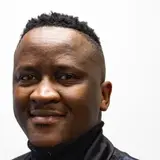
Photo: City of Johannesburg, source
Attendance
- Present
- 36
- Leave of absence
- 1
- Absent without leave
- 0
- Arrived late
- 2
- Left early
- 0
Every meeting, oldest to newest. Hover a square for the date.
- Tuesday, 9 July 2024: Present
- Thursday, 25 July 2024: Present
- Tuesday, 30 July 2024: Present
- Friday, 16 August 2024: Present
- Wednesday, 21 August 2024: Present
- Thursday, 29 August 2024: Present
- Wednesday, 18 September 2024: Present
- Wednesday, 18 September 2024: Present
- Wednesday, 23 October 2024: Present
- Wednesday, 20 November 2024: Present
- Wednesday, 27 November 2024: Present
- Friday, 17 January 2025: Present
- Thursday, 30 January 2025: Present
- Friday, 21 February 2025: Present
- Thursday, 27 February 2025: Present
- Thursday, 13 March 2025: Present
- Wednesday, 26 March 2025: Present
- Wednesday, 30 April 2025: Present
- Wednesday, 7 May 2025: Present
- Thursday, 8 May 2025: Present
- Wednesday, 28 May 2025: Present
- Wednesday, 18 June 2025: Present
- Wednesday, 25 June 2025: Present
- Wednesday, 25 June 2025: Present
- Thursday, 3 July 2025: Present
- Wednesday, 30 July 2025: Present
- Thursday, 28 August 2025: Present
- Tuesday, 2 September 2025: Present
- Monday, 29 September 2025: Present
- Monday, 29 September 2025: Present
- Thursday, 23 October 2025: Present
- Thursday, 30 October 2025: Present
- Thursday, 29 January 2026: Present
- Thursday, 26 February 2026: Present
- Thursday, 26 February 2026: Present
- Thursday, 12 March 2026: Present
- Friday, 20 March 2026: Leave of absence
PresentLeave of absenceAbsent without leave
Reasons given for leave: Private business (1).
Meeting by meeting (37)
- Friday, 20 March 2026Leave of absence: Private business47th extra-ordinary council meeting
- Thursday, 12 March 2026Present · arrived late46th extra-ordinary council meeting
- Thursday, 26 February 2026Present36th ordinary council meeting
- Thursday, 26 February 2026Present · arrived late10th special council meeting in honour of the late councillor r a l nkosi held at the constance connie bapela council chamber, braamfontein, on thursday, 26 february 2026 at 08:30. speaker of council councillor m arnolds
- Thursday, 29 January 2026Present35th ordinary council meeting
- Thursday, 30 October 2025Present34th ordinary council meeting
- Thursday, 23 October 2025Present44th extra-ordinary council meeting
- Monday, 29 September 2025Present9th special council meeting in honour of the late councillor m c williams held at the constance connie bapela council chamber, braamfontein, on monday, 29 september 2025 at 09:00. speaker of council councillor m arnolds
- Monday, 29 September 2025Present33rd ordinary council meeting
- Tuesday, 2 September 2025Present43rd extra-ordinary council meeting
- Thursday, 28 August 2025Present32nd ordinary council meeting
- Wednesday, 30 July 2025Present42nd extra-ordinary council meeting
- Thursday, 3 July 2025Present41st extra-ordinary council meeting will be
- Wednesday, 25 June 2025Present7th special council meeting in honour of the late councillor tc buthelezi held at the constance connie bapela council chamber, braamfontein, on wednesday, 25 june 2025 at 09:00. speaker of council councillor n mthembu
- Wednesday, 25 June 2025Present31st ordinary council meeting
- Wednesday, 18 June 2025Present40th extra-ordinary council meeting
- Wednesday, 28 May 2025Present30th ordinary meeting (budget speech)
- Thursday, 8 May 2025Present39th extra-ordinary council meeting
- Wednesday, 7 May 2025Presentstate of the city address (soca),
- Wednesday, 30 April 2025Present37th extra-ordinary council meeting
- Wednesday, 26 March 2025Present29th ordinary council meeting of thes city of johannesburg municipality
- Thursday, 13 March 2025Present36th extra-ordinary council meeting
- Thursday, 27 February 2025Present28th ordinary council meeting
- Friday, 21 February 2025Present35th extra-ordinary council meeting
- Thursday, 30 January 2025Present27th ordinary council meeting
- Friday, 17 January 2025Present34th extra-ordinary council meeting
- Wednesday, 27 November 2024Present26th ordinary council meeting
- Wednesday, 20 November 2024Present33rd extra-ordinary council meeting
- Wednesday, 23 October 2024Present32nd extra-ordinary council meeting
- Wednesday, 18 September 2024Present4th special council meeting in honour of the late councillor m mphahlele held at the constance connie bapela council chamber, braamfontein, on wednesday, 18 september 2024 at 09:00. speaker of council councillor n mthembu
- Wednesday, 18 September 2024Present25th ordinary council meeting
- Thursday, 29 August 2024Present24th ordinary council meeting
- Wednesday, 21 August 2024Present31st extra-ordinary council meeting will be
- Friday, 16 August 2024Present30th extra-ordinary council meeting
- Tuesday, 30 July 2024Present23rd ordinary council meeting
- Thursday, 25 July 2024Present29th extra-ordinary council meeting
- Tuesday, 9 July 2024Present28th extra-ordinary council meeting
"Absent without leave" means the signed minutes of a meeting held while they were on council neither list them as present nor excuse them, and no similar name appears that day, so misspellings in the minutes don't count against anyone. Each square links to the minutes.
In the chamber
From the 10 sittings transcribed so far in their term. Times are approximate, to the nearest transcript line.
- Not present when called
- 1
- Times given the floor
- 15
- Average wait to start
- 8 s
- Average greetings first
- 2 s
How they speak (AI judgments by Jev) Report an error
- Make a checkable factual claim59%
- Rely mainly on emotional appeal42%
- Stay on the agenda item73%
Typical level when disagreeing: Counterargument
Share of their 89 transcribed lines. These describe how someone argues, not whether they are right; there is no overall score.
Apology or leave of absence (3)
- 26 Aug 2026 · 00:40:12Arriving late. UDM late arrival. sitting
- 25 Jun 2026 · 00:48:37Arriving late. Will arrive late. sitting
- 24 Jun 2026 · 00:22:03Party business. Written apology for party business. sitting
Not present when called (1)
- 30 Sept 2026 · 08:40:29Called on item 25; chair asks whether the UDM has left. sitting
In their words
Every time the chair gave them the floor in a transcribed sitting (15), newest first. The words are the AI transcript of that stretch of the livestream (Argon), so they can include the chair or an interjection; the time link is the place to check.
30 Sept 2026 · 09:41:24Motion 1: Renaming Wolmarans Street · 1 min 40 s
Read what they said (202 words)
Am I audible, Speaker?
Very.
Am I audible, Speaker?
You are audible, Councillor Zigebe.
Thank you, Speaker. Speaker, the names we give our streets are more than signboards. They tell the story of who we are, what we value, and whose contribution we choose to remember. Today I table a proposal to rename Wolmarans Street to Dr. uZwi-Lezwe Radebe Street. Dr. uZwi-Lezwe Radebe's contribution reaches beyond spiritual leadership. His work has advanced education, youth development, employment opportunities, health and wellness, poverty alleviation,
and the preservation of African indigenous knowledge and identity. But Speaker, this council should not decide this question for the people. We must open the process to the people. This motion specifically requires the proposed renaming to follow the city's policy, including public participation and all applicable legislation. Let the communities of Johannesburg engage, let them debate it, let them decide what their streets and landmarks should represent. Renaming is not simply about changing a sign.
It is about memory, identity, and ensuring that Johannesburg's public spaces recognize those who have contributed to building and uplifting its people. Let us therefore take this proposal to the people and let the people have their say. I so move. Thank you, Speaker.
30 Sept 2026 · 05:11:13Item 7 GBVF Strategy · 6 s
Read what they said (6 words)
Support the item, Speaker. Thank you.
27 Aug 2026 · 02:44:47Item 46: Councillor Funeral Support Policy · 4 min 26 s
Read what they said (662 words)
Madam Speaker how an institution honors those who served it in life reveals something of its own humanity
Just hold on Councilor Zigebe. Can the Councilor that just spoke switch off his mic?
Councilor Zigebe can you speak?
Who's Councilor Mabunda? Your mic is on, switch it off please. Thank you Councilor Zigebe you can carry on.
How an institution honors those who served it in life reveals something of its own humanity when they die. A councilor is not merely a name on a party list. A councilor carries the burdens of communities and remains accountable to residents until the last day of service. When a serving councilor passes away the city has a responsibility to respond with dignity, consistency, and respect for the bereaved family.
This policy fulfills that responsibility. It closes a gap created when the former civic funeral policy was rescinded and establishes a lawful, transparent, and uniform framework for memorial and bereavement support. It ensures that every serving councilor is treated with equal dignity regardless of party position or political influence.
We welcome its practical approach. The city will coordinate a council contribute uh coordinate a council, contribute and facilitate venue, burial, ceremonial, and public safety support through existing departments and entities. These are measured forms of institutional solidarity not personal enrichment. The policy also demonstrates responsible government.
Support must be provided through existing mandates, approved tariffs, lawful waivers, and proper delegations. Every contribution must be recorded, assigned its full monetary value, and disclosed in the city's annual financial statements. In this way compassion and accountability reinforce one another. As we implement the policy the administration should harmonize its title.
Correct the MFMA reference to Act 56 of 2023 of 2003 rather and align the cross-reference in Clause 11.1. The cover report should recognize that waived tariffs and municipal resources carry a value that must be recorded. These refinements strengthen an already sound policy. The family must remain central, its culture, faith, and burial preferences must guide the city's participation.
Where burial occurs outside Johannesburg the administration should clarify which support can lawfully follow the families beyond the city's jurisdiction. Speaker this is how a mature institution governs. It plans before the tragedy, applies one standard to all, and ensures that grief is met with order, compassion, and respect. The UDM fully supports the Councilor Funeral Support Policy and commends the Rules Committee
40 seconds left.
and the legislature for bringing forward a framework that honors public service while protecting the integrity of the city. We must also honor the chairperson the former chairperson of the Rules Committee uCouncilor Brenda Dammie who passed on fighting for this policy to see the day of light. Speaker um on the issue of uh Alderman Christians we must not mislead the house.
It was mentioned that if anyone has an issue in the policy in the Monday meeting that we had, the policy would be posted on the group and anyone who has a problem would then say these are the issues that I have. No one has said anything until this day. So the policy did not just jump somewhere and come here. It is in the WhatsApp group and the promise and the promise was that if there are any issues
Can you just hold on? Just hold on. You have 3 seconds, just hold on. I'll give you your 3 seconds. Councilor Christians.
Thank you Speaker. I rise in terms of Rule 72. The councilor speaking now has just misled this house. There was no policy posted on our group to comment on. Thank you.
But I got the same information now now when I was asking legal and legal said they put it on the group. Councilor Zigebe.
Touche. So here you go. Thank you very much Speaker. I think that's that statement and your statement says it all. Some of the people are here to play games while we are busy. Thank you so much.
27 Aug 2026 · 01:24:22Item 36: HIV/AIDS conditional grant · 3 min 5 s
Read what they said (398 words)
Thank you, speaker. The struggle against HIV is one of South Africa's greatest public health achievements, but it is not yet a victory we can declare complete. Statistics South Africa estimates that 8.15 million people were living with HIV in 2025, representing 12.9% of our population. Among adults aged 15 to 49, prevalence was estimated at 18.1%. Um behind every figure
is a person who needs testing, uninterrupted treatment, and freedom from stigma. The UDM supports accepting this R35.178 million conditional grant, cuz Jozi Ihlomile takes health um education into undeserved uh to underserved um rather communities instead of waiting for residents to find the health system. It re- its reach across seven regions, 74 wards, and 100 sites, supported
by 692 field workers, that is significant. It also creates livelihoods while strengthening the response to HIV, tuberculosis, and sexually transmitted infections. However, speaker, we must be rigorous about what success means. The target is to reach almost 3.
Councillor Zigebe, just stop, I'm going to stop your time. To those councillors that are leaving, and everybody else, when we go for lunch, please sign the second register. Please do that. Thank you. Councillor Zigebe, you may go on.
The target is to reach almost 3.3 million people in more than 1 million households. That is ambitious and welcome, but a knock on a door cannot become the final measure of impact. Council must receive evidence of how many people were referred, tested, linked to treatment, and retained in care. We must know whether young people, women, persons with disabilities, LGBTQIA+ communities, and other vulnerable groups are reached without discrimination. Confidentiality must
be protected because careless a careless household disclosures can expose a resident to stigma, violence, or exclusion. The funding model requires disciplined oversight. 70% is reserved for door-to-door education, 20% for AIDS council coordination, and 10% for administration. Every rand must follow that purpose. Monthly reports should be reg- regionally disaggregated, independently verified, and placed before the oversight committee. Ward councillors and
committees must support coordination, but health services must never be politicized. Recruitment, site selection, and access must be fair and based on public health need.
40 seconds.
Education is essential, but education without available testing, medicine, and functional referral pathways creates awareness without a solution. The city must therefore connect every campaign to clinics, mobile services, social support, and reliable follow-up. I thank you.
26 Aug 2026 · 08:14:5815 and 16 · 2 s
Read what they said (5 words)
Both noted, Speaker. Thank you.
26 Aug 2026 · 07:55:3114 · 3 s
Read what they said (8 words)
The report is noted, Chair. Thank you, Speaker.
26 Aug 2026 · 06:10:116 · 2 min 41 s
Read what they said (348 words)
Madam Speaker, the transition to cleaner and more reliable energy is no longer merely an environmental ambition. It is an economic, financial, and service delivery necessity for Johannesburg. This program offers the city an opportunity to improve energy efficiency in municipal facilities, install rooftop solar, modernize bidirectional metering, and strengthen the technical planning required for a lower-carbon future. However, we must be clear about what is before us.
The estimated 200 megawatts of rooftop solar and 10 megawatts of battery storage represents the city's potential. They are not what this 54 million grant will immediately deliver. Council must guard against presenting a pilot project as though it were already a city-wide energy solution. The pilot must instead prove that the city can design, procure, implement, and maintain renewable energy infrastructure responsibly. If it succeeds, it can become
a credible foundation for expansion and further investment. Speaker, the city is also indicating co-financing of approximately just above 100 million from City Power's medium-term allocations. While this commitment is not contractually binding and remains subject to annual budget approval, council must still insist that existing infrastructure priorities are not displaced without proper justification. Every rand committed must produce measurable value, reduced electricity costs, greater energy resilience,
functioning municipal facilities, and a credible pathway towards reducing dependence on Eskom. We further welcome the proposed modernization of metering and billing systems. Johannesburg cannot build an embedded generation market on inaccurate accounts, unregistered installations, and unreliable data. Bidirectional metering, feed-in arrangements, and electricity wheeling must be governed by transparent tariffs, sound systems, and equal access to opportunities, not reserved
for large private interests only. This program must also create opportunities for local technicians, young graduates, small businesses, and communities historically excluded from the energy economy. The UDM supports this item, but our support carries an expectation of disciplined implementation, transparent procurement, and regular reporting to council. We should receive clear milestones, expenditure reports, energy generated, savings achieved, and the number of municipal facilities benefiting.
Johannesburg must move from studying its energy future to responsibly building it. Joburg can work. Let's get to work.
26 Aug 2026 · 02:25:293 · 2 min 34 s
Read what they said (441 words)
Thank you, Madam Speaker. Honourable Speaker, comrades, colleagues, and residents of the City of Johannesburg, allow me to say protocol observed. I rise in support and noting of the April and May Section 71 reports. Let us allow the numbers to speak, because the numbers tell us that the ANC-led
Um thank you very much, Madam Speaker. All protocol observed. Congratulations, Councillor Radebe, a well-deserved appointment. The City of Johannesburg is not running short of policies, codes, strategies, or legislative frameworks. This code adds to an already existing um body of governance instruments intended to guide our conduct. Our responsibility, therefore, is not simply to adopt another document, but to give practical meaning to the principles it contains. This code must not lie fallow
uh somewhere in the city's archives gathering dust while unethical conduct continues unchecked. It must become a living instrument that shapes how we govern, appoint, procure, how we exercise oversight, and how we account to the people of Johannesburg. The United Democratic Movement supports the adoption of this code because ethical leadership is the foundation of credible government. Leadership is not merely the authority of uh to make decisions; rather, it is the responsibility to make those decisions honestly, fairly,
and in the best interest of the public. We welcome the code's emphasis on community-centered governance. Every policy we adopt, appoint, um how we make, and every rand uh we spend must ultimately serve all the residents of Johannesburg, including those who did not vote for us. We also welcome its insistence on competence and integrity in appointments, stability with the administration, and the respect for the separation of powers between political leadership and administrative responsibility.
Political leaders must provide direction, but professional officials must be allowed to perform their duties without improper political or factional interference. Madam Speaker, in a coalition government, ethical leadership also requires maturity. Our political differences must never prevent us from acting in the long-term interest of the city. We must be able to disagree respectfully while remaining united in our duty to serve. However, adoption without implementation is merely symbolism.
Training sessions and roadshows must lead to measurable institutional change. Council must receive regular reports on implementation, including how the code is influencing appointments,
50 seconds, Councillor.
consequence management, conflicts of interest, audit findings, and performances. The people of Johannesburg will not measure ethical leadership by the number of documents we adopt, they will measure it through responsible expenditure, accountable leadership, and reliable services. Let this code move from paper to practice, from commitment to conduct, and from principle to action. Joburg can work, let's get to work. Thank you, Speaker.
22 Jul 2026 · 05:53:0320, 21 and 22 · 5 s
Read what they said (10 words)
Speaker, thank you very much. The UDM notes the report.
22 Jul 2026 · 05:36:5217, 18 and 19 · 3 s
Read what they said (10 words)
Thank you very much, Speaker. The UDM notes the report.
22 Jul 2026 · 03:31:41Items 9-13 (EISD, City Power, Joburg Water, Pikitup) · 3 min 11 s
Read what they said (432 words)
Speaker, the report before us presents an honest reflection of both progress and persistent challenges within the EISD service cluster. The UDM commends the areas where improvements have been made. EISD improved its overall performance from 80% to 87% while City Power
Hold on, Councillor Zigebe. The Councillor with the grey suit that's making a noise, can you please be seated? Thank you, Councillor Zigebe.
Um.
Apologies.
Thank you, Speaker. The UDM commends the areas where improvements have been made. EISD improved its overall performance from 80% to 87%, while City Power increased its performance from 67.7% to 71%. These improvements demonstrate that where leadership, oversight and management are focused, results can be achieved. Speaker, this report also reminds us that operational improvements do not always translate into better service delivery on the ground.
Johannesburg Water continues to struggle with aging infrastructure. Only 42% of pipe bursts were repaired within the required 48 hours against the target of 90%, while capital expenditure remains significantly below target. This means residents continue to experience water outages, sewer spillages and delayed maintenance because infrastructure renewal is simply not keeping pace with demand. Equally concerning is the state of our environment.
The committee found unacceptable bacteriological pollution across all major river catchments, largely driven by sewer spillages and aging waste water infrastructure. That is not merely an environmental issue. It is a public health concern that requires accelerated investment. Speaker, perhaps the greatest concern lies with Pikitup. Performance declined from 90% to 75%, while the entity continues to battle refuse collection backlogs, fleet shortages and a vacancy rate of 56%.
One cannot expect efficient refuse collection when more than half of the required workforce is vacant and more than 300 casual workers are on strike as we speak. The recovery plans requested by the committee must therefore be implemented with urgency rather than becoming another compliance exercise, while operational indicators at City Power improving,
30 seconds.
the financial position remains fragile. A year to date loss of over R2 billion and an overdraft exceeding R19 billion cannot be ignored. Operational gains will mean little if financial sustainability is not restored. Oversight is not about finding fault. It is about ensuring improvement. This report does strike a balance. It acknowledges progress where it exists,
but it also demands accountability where performance falls short. The recommendations before Council are practical, time-bound and measurable. Our responsibility now is to ensure that they're implemented because the residents are not interested in quarterly statistics. They are interested in clean streets, reliable electricity, safe water and functioning infrastructure. I support these reports.
25 Jun 2026 · 05:18:157 · 1 min 6 s
Read what they said (137 words)
Thank you Speaker.
Angazi ukhansela Nkonyeni wenzeni
in my absence. Eh, but whatever you did,
iyakulandela mfana.
Speaker, this motion does not ask council to impose a final outcome without consultation. It asks the city to conduct a proper feasibility study, assess infrastructure capacity and engage residents, universities, students, property owners and other affected stakeholders. It further proposes that the city explore a city improvement district to strengthen safety, cleaning and maintenance of public spaces.
Auckland Park must not continue growing through fragmented and reactive interventions. The city must plan for its future in a coordinated, lawful and sustainable manner. By supporting this motion, council will be supporting safer student housing, better urban management, protected residential interests and Johannesburg's broader knowledge economy. I therefore second the motion and call upon council to support it. I thank you.
25 Jun 2026 · 03:23:5988 · 55 s
Read what they said (140 words)
Good day, Speaker. We must begin by acknowledging the extraordinary patience and hard work of the Rules Committee, the Office of the Speaker, Councillor Affairs, and every member who contributed to this process. This policy first came before the Rules Committee in March 2022. Since then, it has been referred to political caucuses, subjected to benchmarking, scrutinized for legal compliance, considered by a special task team, reformatted, and repeatedly circulated for further input. For more than four years, the committee has listened, amended, and accommodated.
It has taken seriously every concern raised, including compliance with the Municipal Finance Management Act and aligns with the city's approved policy framework. Speaker, Johannesburg currently has no formal policy through which it can honor councillors who have rendered exceptional and distinguished service to this institution. This policy corrects that gap. It establishes transparent criteria
28 May 2026 · 02:35:03Item 3: debate on the budget speech · 5 min 49 s
Read what they said (797 words)
Madam Speaker, protocol has been observed and established. The first responsibility of leadership is honesty, and honesty requires us to admit that Johannesburg stands at a crossroad. We are governing a city with immense economic potential, but also immense structural strain. A city contributing nearly 15% of South Africa's GDP, yet simultaneously carrying an infrastructure backlog exceeding 220 billion.
A city where over 5.9 million residents depend on systems that are aging faster than they are being renewed. This debate, therefore, cannot be reduced to politics. It must be about survival, sustainability and the future direction of Johannesburg. Speaker, the budget before us correctly identifies the core pressures facing the city: non-revenue water losses sitting at 44.7%, electricity losses at 27%.
Those numbers are not merely technical indicators, they are symptoms of deeper institutional weaknesses. To put this into perspective, if Johannesburg Water loses nearly half of treated water before it reaches residents, it means billions of rand are effectively leaking out of the system annually while communities face shortages and interruptions. When City Power loses 27% of electricity through illegal connections, aging infrastructure and theft,
that translates directly into reduced maintenance budgets, delayed upgrades and pressure for tariff increases on paying residents. And this is why, Speaker, I appreciate that this budget attempts to place infrastructure recovery and trading service reforms at the center of the city's financial strategy. The Metro Trading Services reform is important, not because residents care about institutional terminology,
but because without stabilizing City Power, Johannesburg Water and Pikitup, this city cannot function. Speaker, plans alone do not inspire confidence anymore, delivery does. The Deputy Executive Mayor correctly states that Johannesburg does not suffer from a lack of plans, but from a failure to convert plans into measurable outcomes. That is perhaps the most honest line in this entire budget speech. Because the reality facing our residents is harsh.
A mother in Soweto does not experience a turnaround strategy, she experiences a burst pipe that remains unattended for weeks. A young graduate in Orange Farm does not experience policy frameworks, he experiences unemployment and hopelessness. A commuter traveling from Alexandra to Sandton does not experience institutional reform, she experiences traffic lights that do not work, roads filled with potholes, and hours lost in traffic daily.
This is why UDM argues strongly that Johannesburg must stop treating maintenance as a secondary expenditure. Deferred maintenance is financially reckless. Every delayed road resurfacing program becomes a reconstruction project later. Every ignored water leak becomes infrastructure collapse. Every stolen cable not replaced properly becomes recurring expenditure. This is why the increase of maintenance expenditure from 7% to 8% is welcomed.
But the city must move with far greater urgency if it genuinely seeks to reverse decline. Madam Speaker, one of the strongest sections of this budget is the recognition that economic recovery cannot happen without restoring basic urban functionality. The allocation of approximately 28.3 billion to City Power operations and 6.7 billion over the medium term towards energy infrastructure is significant.
So too is the 21.6 billion allocation towards Johannesburg Water operations and the 6.4 billion medium term capital investment. But these allocations must now produce visible improvements. Residents must see fewer outages, fewer substations failing, reduced response times, improved billing credibility, better maintenance turnaround times. Otherwise these figures remain numbers on paper disconnected from lived reality.
Let us also speak honestly about safety and urban management. The budget allocates 7.2 billion towards JMPD visibility, emergency services, CCTV expansion and urban management interventions. This is necessary because infrastructure destruction and criminality are directly undermining the city's finances and investor confidence. Cable theft alone costs municipalities across South Africa billions annually.
Illegal dumping destroys public spaces and increases environmental health risks. Hijacked buildings weaken the inner city economy and erode confidence in governance. We therefore support a developmental but firm approach to law enforcement because lawlessness hurts the poor first and hardest. A budget can never be called progressive if it does not meaningfully confront unemployment, inequality and exclusion.
The city's Expanded Public Works Programme target of 12,250 job opportunities is welcome, but Johannesburg requires a deeper economic response. We need infrastructure-led employment, township industrialization, artisan development linked to infrastructure programs, support for township businesses to participate in procurement chains, skills development for the missing middle, people above 35 years old, who are too old for youth programs,
30 seconds.
but excluded from formal employment opportunities. Speaker, economic inclusion cannot remain a slogan, it must become a measurable policy. And that is why the commitment that 60% of capital expenditure will go towards historically marginalized communities is important. But council must insist on transparency. Residents must know where projects are located, how much is being spent, who is benefiting, and what outcomes are expected. I thank you.
26 May 2026 · 00:57:33Request for approval to enter into a loan agreement with KfW · 2 min 29 s
Read what they said (331 words)
Madam Speaker, let me congratulate the only team that has made history, winning the league, winning the game without even lifting a finger.
EzikaMagebhula ezagebhula umhlaba kaMasipala ngenkani.
We are groundbreakers. Let me first acknowledge and commemorate a significant day on the African continent's calendar, Africa Day. This day must never become a symbolic celebration disconnected from the realities confronting African people. Africa Day reminds us that liberation was never only about political freedom. It was also about restoring African dignity, identity, memory, and African humanity. That is why the signing of the African Indigenous Spirituality Charter under the stewardship of African Association for Indigenous Spirituality and African Hidden Voices this past Saturday was both significant and necessary. The charter is not about division or attacking anyone's beliefs. It seeks to affirm and protect African indigenous knowledge systems, spirituality, customs, and heritage that were historically marginalized and erased through colonialism and imposed systems of domination.
Let me acknowledge the contribution of Dr. Nokuzola Mndende, whose work continues to contribute meaningfully to conversations around African indigenous spirituality, African restoration, and the importance of preserving African systems of knowledge and identity in a democratic society. Importantly, this charter stands firmly with the values of our constitutional democracy. The Constitution of South Africa protects freedom of belief, conscience, culture, language, and the rights of communities to practice and preserve their tradition with dignity. The charter is also aligned with international instruments such as the United Nations Declaration on the Rights of Indigenous Peoples and the African Charter on Human and Peoples' Rights, both which recognize the importance of protecting indigenous identity, heritage, and cultural systems. Madam Speaker, Africa cannot rise while disconnected from itself. African restoration cannot only be economic and political. It must also involve restoring confidence in African civilization, African knowledge systems, and African humanity. Africa Day must therefore become more than a celebration. It must become a commitment to African renewal. We do note and support the
the item. Thank you.
Spoke on
- 30 Sept 2026 · 01:58:46Item 26 vote: Crown North lease carried
- 30 Sept 2026 · 05:08:32Item 7: Gender-Based Violence and Femicide Strategy
- 30 Sept 2026 · 09:41:02Motion 1: Renaming Wolmarans Street to Dr uZwi-Lezwe Radebe, proposal
- 30 Sept 2026 · 09:55:19Motion 1: ANC position, MMC Amad and proposer's reply
- 27 Aug 2026 · 01:20:00Item 36: HIV/AIDS conditional grant (R35.178 million)
- 27 Aug 2026 · 02:39:07Item 46: EFF and UDM support
- 26 Aug 2026 · 02:20:45Item 3: Code for Ethical Leadership (ACDP, AIC, UDM)
- 26 Aug 2026 · 06:04:11Item 6: GEF grant funding, first round of party speakers
- 26 Aug 2026 · 07:53:24Item 14: Township Economies By-law implementation plan
- 26 Aug 2026 · 08:11:10Items 15 and 16: Region A and Region E economic development plans, ACDP, UDM, FF+ and DA
- 22 Jul 2026 · 03:25:17DA, FF+ and UDM on EISD cluster
- 22 Jul 2026 · 05:36:38Items 17-19: party inputs on Health and Social Development
- 22 Jul 2026 · 05:53:03Items 20-22: party debate on housing and JOSHCO
- 25 Jun 2026 · 03:16:04Item 88: Revised Alderman Policy debate
- 25 Jun 2026 · 05:12:48Motion: Declaration of Auckland Park as a student precinct (proposal and seconding)
- 28 May 2026 · 02:34:49UDM's Cllr Zigebe on infrastructure and trading services reform
- 26 May 2026 · 00:56:01EFF and UDM notes and support